


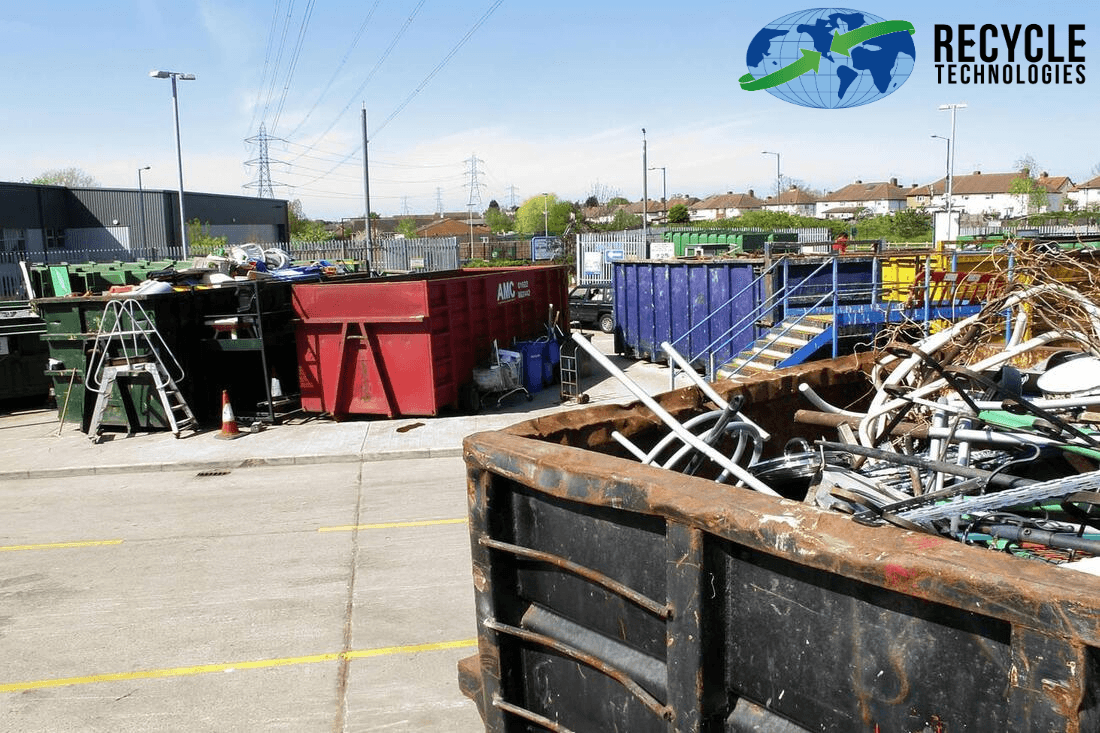
You’ve got a box of old cords, a dead laptop, a few used batteries, and a couple of burned-out fluorescent tubes. You search "recycle center near me" or “recycling center near me,” drive to the closest result, and find out it only takes cans and cardboard.
That happens because "recycling center" covers very different types of facilities. A municipal recycling site, a household hazardous waste collection center, and an electronics recycler don't necessarily accept the same materials.
This guide explains the differences, what to check before visiting, how to prepare your items, and where to drop off electronics, batteries, es and light bulbs near the Twin Cities or Milwaukee.
Recycle Technologies also operates drop-off locations in several US markets. Accepted materials and operating hours vary by location, so check the RTI drop-off location finder before making the trip.
Why the Right Recycle Center Matters
Some materials need specialized handling. Lithium-ion batteries can cause fires if damaged or improperly discarded. Fluorescent tubes contain mercury, and CRT monitors can contain lead. A general recycling center may not be equipped to handle them.
Your data stays on your devices. Phones, laptops, and hard drives can contain personal or business information even after you stop using them. Check how a recycler handles data before handing over your equipment.
The wrong stop wastes time. Showing up with materials a facility doesn't accept means another trip or a box of unwanted electronics sitting in your garage.
Not Every Recycling Center Takes the Same Things
Different facilities handle different materials. Before visiting, understand which type of recycling center matches what you're trying to dispose of.
Local recycling centers (curbside or municipal): These programs typically handle paper, cardboard, plastic containers, glass and cans. Accepted materials depend on local collection rules, and electronics or batteries usually need a separate collection program.
Household hazardous waste sites: Run by cities or counties, these facilities may accept batteries, fluorescent bulbs and certain electronics. Many are limited to local residents and have specific operating days, appointment requirements or quantity limits.
Retail take-back programs: Some retailers collect specific products, such as used phones, rechargeable batteries and small electronics. Accepted brands, items and quantities vary by store.
Scrap metal yards: These businesses accept certain metal materials, but may reject electronics containing screens, circuit boards or batteries.
Electronics recyclers: These facilities specialize in electronic waste. Depending on the recycler, accepted items may include computers, monitors, TVs, phones, printers, batteries, bulbs and data-bearing devices. Some also serve businesses with larger equipment loads.
If what you're getting rid of plugs in, holds a charge or stores data, look for an electronics recycling center rather than assuming a general recycling facility will accept it.
Comparing Your Recycling Options
Option | Good for | What to check |
Household trash | Ordinary waste permitted under local rules | Some batteries and electronics cannot go in the trash. |
Local recycling center | Paper, cardboard, plastic containers, glass and cans | Municipal programs generally don't accept e-waste in curbside bins. |
City or county hazardous waste site | Batteries, fluorescent bulbs and certain electronics | Resident eligibility, appointment requirements, collection days and quantity limits. |
Retail take-back | Specific phones, rechargeable batteries and small electronics | Accepted brands, item types and store policies. |
Scrap metal yard | Accepted metal materials | Whether the facility takes electronics, screens or battery-containing items. |
Electronics recycler | Computers, monitors, TVs, phones, batteries, bulbs and hard drives | Accepted materials, fees, data handling and drop-off requirements. |
What to Check Before You Go
A quick call or website check can save you a wasted trip. Ask these questions before loading your vehicle:
Do you accept what I have? Get confirmation for each item, especially TVs, batteries, fluorescent tubes, and older monitors.
Who can drop off? Some collection sites serve residents only, while others accept both households and businesses.
Is there a fee? Electronics recycling fees often depend on the item, weight, or quantity. Ask for pricing before visiting.
Do I need an appointment? Some facilities accept walk-ins during regular hours, while others require appointments for larger loads.
How do you handle data? Ask how computers, phones,s and hard drives are processed. Find out whether secure data erasure or physical destruction is available.
Will I receive documentation? Businesses may need a Certificate of Recycling or Certificate of Destruction for their records.
What happens after drop-off? A recycler should be able to explain how equipment is sorted, processed, and sent through its recycling program.
How to Prepare Your Items for Recycling
Preparing your electronics before a visit helps protect your data and makes the drop-off process easier.
Back up and erase your devices. Save important files, sign out of accounts, and perform a factory reset where appropriate. A factory reset may not be sufficient for sensitive business data or failed drives. Ask about professional data sanitization or hard drive destruction.
Secure loose lithium-ion batteries. Cover exposed battery terminals with non-conductive tape, or place each battery in its own plastic bag. The US Environmental Protection Agency's battery disposal guidance explains how to reduce the risk of battery fires during collection and transport.
Protect fluorescent tubes. Keep tubes in their original packaging or a sturdy container designed to prevent breakage.
Group cords and accessories. Place small cables, chargers and accessories in separate bags or boxes so they're easier to handle.
Organize business equipment. Prepare an inventory of the equipment you're bringing. For larger loads, confirm palletizing, unloading and appointment requirements with the facility first.
Electronics Recycling Drop-Off in Minnesota and Wisconsin
Looking for an electronics recycling drop-off near the Twin Cities or Milwaukee? Recycle Technologies operates two primary R2v3-certified facilities in Blaine, Minnesota, and New Berlin, Wisconsin.
Both locations accept drop-offs from households and businesses during regular operating hours. No appointment is needed for accepted items during those hours.
Use the location details below to choose the facility that accepts your materials.
Blaine, MN (Twin Cities)
Address: 1525 99th Ln NE, Blaine, MN 55449
Phone: 763-559-5130
Hours: Monday–Friday, 7:30 AM–4:00 PM
Accepts: Electronics, batteries, light bulbs, ballasts, hard drives,s and paper for shredding.
Drop-off: Use the rear loading area, accessible from 99th Lane NE.
The Blaine facility is convenient for people and businesses in Blaine, Coon Rapids, Fridley, Anoka, Minneapolis and the surrounding north metro.
For more local recycling information, see Minnesota recycling services.
New Berlin, WI (Milwaukee Area)
Address: 2815 South 171st Street, New Berlin, WI 53151
Phone: 262-798-3040
Hours: Monday–Friday, 7:30 AM–4:00 PM
Accepts: Electronics, batteries, TVs, and paper for shredding.
Drop-off: Enter through the main lot on South 171st Street.
The New Berlin facility is convenient for New Berlin, Waukesha, Brookfield, West Allis, Milwaukee, and nearby communities.
For more local recycling information, see Wisconsin recycling services.
Before visiting: Fees depend on the item and quantity. Accepted materials also vary by location, so call ahead to confirm your items and ask about pricing. You can find additional RTI facilities and location details on the drop-off locations page.
Business Electronics Recycling Pickup
Offices, schools, property managers, manufacturers, and other organizations may have more equipment than they can transport themselves.
Recycle Technologies offers scheduled commercial pickup for businesses. Pickup is available within approximately 100 miles of each primary facility and across the Chicago area.
Businesses can arrange collection for electronics, batteries, lamps, paper and other accepted materials.
No Recycling Center Near You?
You don't necessarily need to drive to a physical recycling facility.
For smaller quantities of electronic waste, the Electronic Waste Recycling Kit from EZ on the Earth offers a mail-in option.
The listed jumbo kit has a 75-pound capacity and includes a heavy-duty cardboard box, protective liners, a prepaid return shipping label,l and documentation for obtaining a Certificate of Recycling.
The mail-in program provides an option for customers across the US who don't live near a suitable drop-off location. Check the product details and accepted materials before ordering.
Frequently Asked Questions
What can I take to a regular recycling center?
Most curbside and municipal recycling programs accept common materials such as paper, cardboard, plastic containers, glass and cans. Rules vary by location. Electronics, batteries and fluorescent bulbs generally require separate collection programs.
Can I recycle an old TV at a drop-off center?
Yes, at facilities that accept TVs. Recycle Technologies lists TVs among the accepted materials at its New Berlin, Wisconsin location. The Blaine, Minnesota list does not specifically mention TVs, so call before bringing one there.
Where can I find hard drive destruction near me?
Recycle Technologies' Blaine facility lists hard drives among its accepted drop-off materials. However, dropping off a drive and having it physically destroyed are separate services. Contact the team beforehand to confirm the destruction option, pricing, and available documentation. You can also learn about hard drive destruction services.
What if my item isn't on the accepted list?
Call the facility before visiting. Some electronics may be reviewed individually, but acceptance depends on the item, quantity and location.
Is it legal to put electronics in the trash in Minnesota or Wisconsin?
The restrictions depend on the state and the type of electronic device.
In Minnesota, disposing of devices with cathode ray tubes (CRTs), such as older CRT monitors and televisions, in mixed municipal solid waste is prohibited. The state also has recycling requirements for covered video display devices. See the Minnesota Pollution Control Agency's electronics recycling guidance.
Wisconsin prohibits several categories of electronics from landfill and incinerator disposal. These include televisions, computers, monitors, desktop printers, cellphones and certain computer accessories. Check the Wisconsin DNR's electronics recycling guidance for the covered device list and disposal rules.
Find a Recycle Center That Takes Your Electronics
The nearest recycling center isn't always the right one. Before making the trip, check what it accepts, who it serves, whether fees apply, and how it handles data-bearing devices.
Recycle Technologies provides electronics recycling drop-off options at locations across the US, along with commercial pickup and mail-in recycling options for customers who need another way to manage electronic waste.
Start by finding a suitable location or requesting a pickup.
Find a Drop-Off Location | Get a Quote